


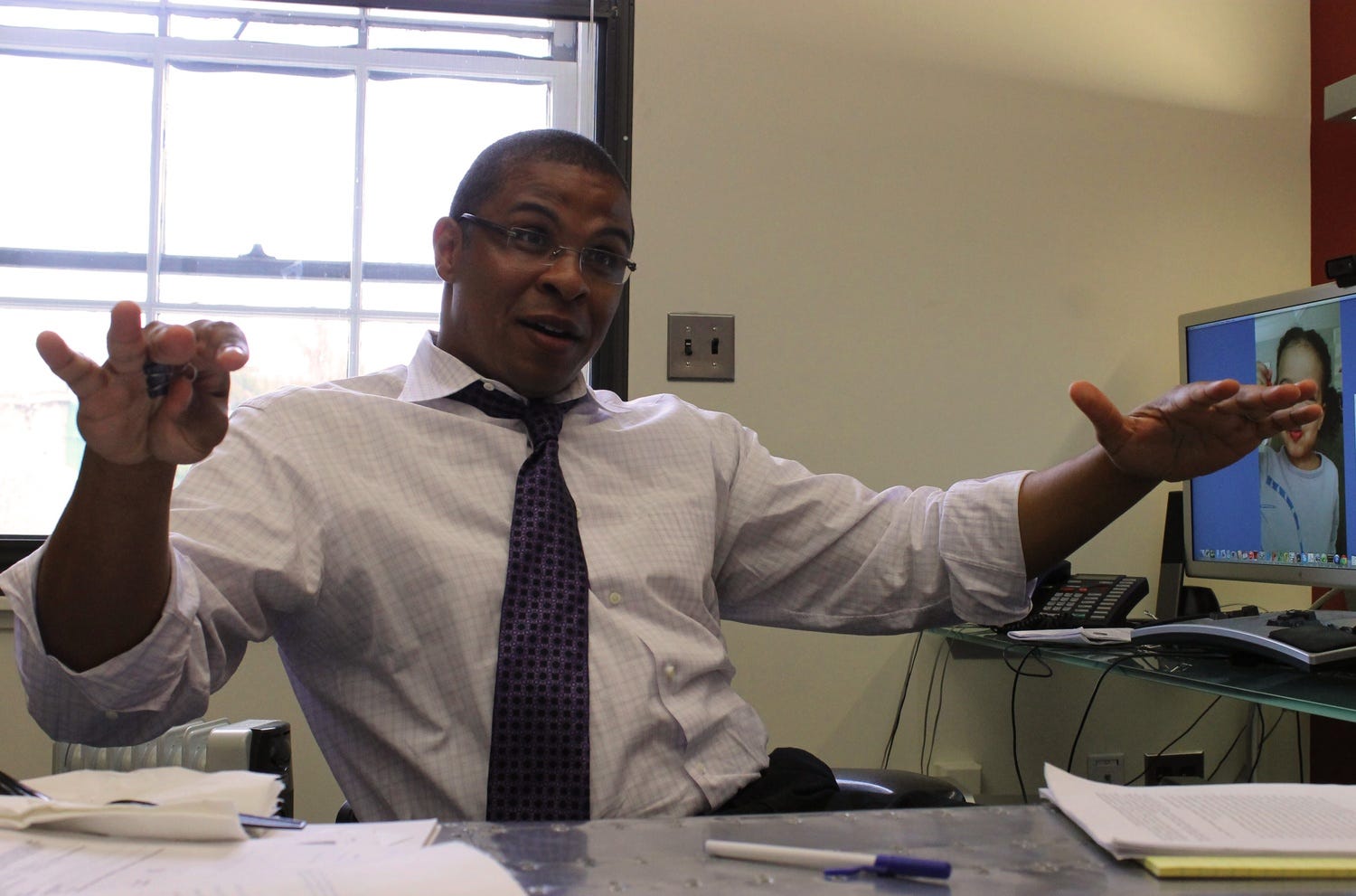
The Carob Trust Prize for Academic Courage was launched shortly after Roland Fryer Jr., an American economist and professor at Harvard, sounded the alarm in 2024 about the suppression of “inconvenient findings” in academia. He did so in a Wall Street Journal essay where he called for a prize for academic truth-telling, one that would be large enough to “matter.” Fryer and Bill Ackman, the CEO of Pershing Square Capital Management, launched the Prize. Ackman has increasingly focused on funding higher-education politics and encouraging free expression.
The prize awards $1 million to five social scientists who, as Fryer and Ackman explain, “have demonstrated intellectual independence, published findings that were attacked rather than answered, and been validated by the evidence—despite the professional cost…Nominees must show a sustained commitment to following logic and evidence regardless of pressure, a willingness to ask questions others avoid, and work that has shifted academic debate, public discourse or policy—often despite being misread, mischaracterized or vilified at the time of publication.” - Fryer & Ackman
For Fryer, his experience came when he published a study in 2016 in the Journal of Political Economy. His study concluded that police aren’t more likely to shoot black Americans than white Americans, after accounting for the relevant context. Before publication, his colleagues warned him not to publish his study, claiming it would ruin his career and subject him to massive hatred and criticism.
It didn’t take long; within minutes of releasing his paper, he was attacked on social media, and his colleagues and fellow scholars remained silent after reading the study, privately referring to it as “rigorous, honest work”.
Shortly after that, Harvard’s Office of Dispute Resolution (ODR) and FAS Dean Claudine Gay concluded that Fryer engaged in “unwelcome sexual conduct” over several years and violated professional conduct policies, creating a hostile work environment. He denied the claims, and it reminded me that Julian Assange, the founder of Wikileaks, was also accused of similar actions in an attempt to destroy his reputation as a result of what he was uncovering. Meanwhile, accusations of child trafficking and sexual abuse among the world’s elite were constantly dismissed as conspiracy theories. More on this later.
It’s important to note that this article is not about the conclusions of the study, nor will I get into that issue and perspective in this article. It’s about freedom over censorship.
“No single study settles a question this large - but silence isn’t how science advances. That silence is the problem—a cultural and an economic one. When the professional cost of publishing an unwelcome finding exceeds the cost of suppressing it, rational scholars suppress it. The result is that the social science literature reflects what researchers are permitted to say rather than what they actually discover. The scope of the problem is difficult to measure, because its most important effects are invisible—though the data we have suggest it is getting worse.” - Fryer & Ackman
This prize is not to single out those who “go against the narrative.” The narrative doesn’t matter, only the data and the methods used to collect it. The prize is for social-science work that is simply well done, with solid methodology, regardless of the conclusion. It’s for good work that is met with targeted and organised suppression and ridicule instead of a proper, well thought-out rebuttal.
“The test isn’t the conclusion. The test is the quality of work, the hostility of the reception. and the verdict of the evidence over time.” - Fryer & Ackman
More On Those Sexual Harassment Claims Against Fryer:
Academic institutions and their connections to people like Jeffrey Epstein, in my opinion, will do whatever they have to do to sway the pendulum towards “political correctness.” Character defamation is a big part of what these people do to people like Fryer, who cause ripples in how we are “supposed to think” and in upholding various political ideologies. Behind these efforts are powerful, unethical, and immoral people who use their influence in ways that require deep-dive investigations to uncover these connections. I won’t go into that here, but I encourage you to check out the work of Rob Montz, an American documentary filmmaker, essayist, and the co-founder and CEO of Good Kid Productions.
He is best known for his provocative, investigative online documentaries and long-form video essays that tackle systemic failures, cultural conflicts, and institutional politics.
Drawing on previously unreported documents and interviews with his colleagues and friends, the documentary argues that Professor Fryer was targeted for ideological reasons. Despite the best efforts of some of the university’s elite, Fryer is still at Harvard, but with severely downgraded status, denied the resources he once had, and marked with a sexual-harassment stigma.
Back To Academic Freedom:
I was happy to come across something: the Carob Trust Prize for Academic Courage, especially in a world where academic freedom seems to be decreasing. The thought that one can only thrive in academia by remaining within the realms of “political correctness” is quite disturbing. Our academic institutions continue to be captured by larger interests. This is something we’ve seen not only within academia but also in medicine, finance, agriculture, technological “progress,” and various other global organisations tasked with solving humanity’s greatest issues, such as the World Health Organisation (WHO).
In our line of work here at Collective Evolution, we’ve come across many examples of scientists in various fields facing this dilemma. Patrick T. Brown, a prominent American climate scientist, for example, left academia over a year ago because he felt the pressures on academic scientists distorted too much research. He felt pressure to “mould” his research to the “preferences of prominent journal editors and the rest of the field.” You can read more about that here.
We saw a lot of the same phenomenon with Covid as well. In fact, Covid marked the first time in history when renowned vaccine scientists, developers, professors of medicine and medical doctors were labelled as “anti-vaccine conspiracy theorists.” The censorship was quite alarming, even though much of it was probably necessary. That being said, a lot of truthful information was caught in those nets as well.
An article published in the BMJ by journalist Laurie Clarke in 2021 highlighted that, at that time, Facebook had already removed at least 16 million pieces of content from its platform and added warnings to approximately 167 million others. By that time, YouTube had already removed nearly 1 million videos related to what they called “dangerous or misleading COVID-19 medical information.”
The BMJ itself was also “fact-checked” multiple times and accused of doing the same. And people around the world were unable to share their articles, despite their publications following the usual legal and external peer review, which was common practice for The BMJ’s high-level editorial oversight and review.
The “academic industrial complex” is boring full speed ahead these days, and it’s becoming more obvious as the years pass and major global events unfold. Science with solid methodology and nearly obvious conclusions can be ridiculed and dismissed as a conspiracy theory, while questionable science with poor methodology and conclusions can be widely shared by legacy media and government organisations through clever marketing and be perceived as unquestionable truth.
The problem seems to be growing. In a 2024 survey of more than 6,000 professors by the Foundation for Individual Rights and Expression, 35% said they had toned down their written work for fear of controversy.
This begs the question: what type of world are we moving into? It seems to encourage self-censorship, a world in which many are afraid to share how they feel and what they believe, for fear of losing their jobs or damaging relationships with their friends and family, perhaps.
Fast-forward to today, we now know that people like Jeffrey Epstein, Bill Gates, and many others linked to the Gates Foundation were instrumental in financing ResearchGate, as well as science “fact checkers”, which, to me at least, seemed to be an attempt to influence scientific discourse.
For example, I recently came across a post by Dr El-Deiry, a prominent physician-scientist, Associate Dean for Oncologic Sciences, and Director of the Legorreta Cancer Centre at Brown University. He shared a piece by Science Guardians claiming that Gates & Epstein “were secretly buying control over what scientists discover, share, and believe — through a platform you probably use: ResearchGate.”
Prominent Journalist Whitney Webb has also done some great investigative work in this area. Her work focuses heavily on the intersection of Epstein, Gates and the broader scientific establishment. In her book One Nation Under Blackmail and various media appearances, Webb argues that Epstein’s interests in science and tech were not merely those of an eccentric philanthropist, but rather part of a coordinated effort toward social engineering, intelligence gathering, and digital control.
This is just one example of what I am hinting at.
Controlling all types of science in various fields has led science down a path of darkness, far from its original purpose, and it’s happening in various academic fields. We are no longer free to believe and investigate; we are made to believe and are now encouraged to criticize those who ask questions and investigate. For the model of scientific control to work, criticism, insults, slander, ridicule, big media, extreme bias, and fear are always used.
Don’t be fooled next time…
The more this beast continues to operate, however, the more exposed it becomes.